


Welcome to Wild Precious Life Psychotherapy
How have your experiences shaped you, like the grooves of a vinyl record and the scratches that make it skip?
Welcome!
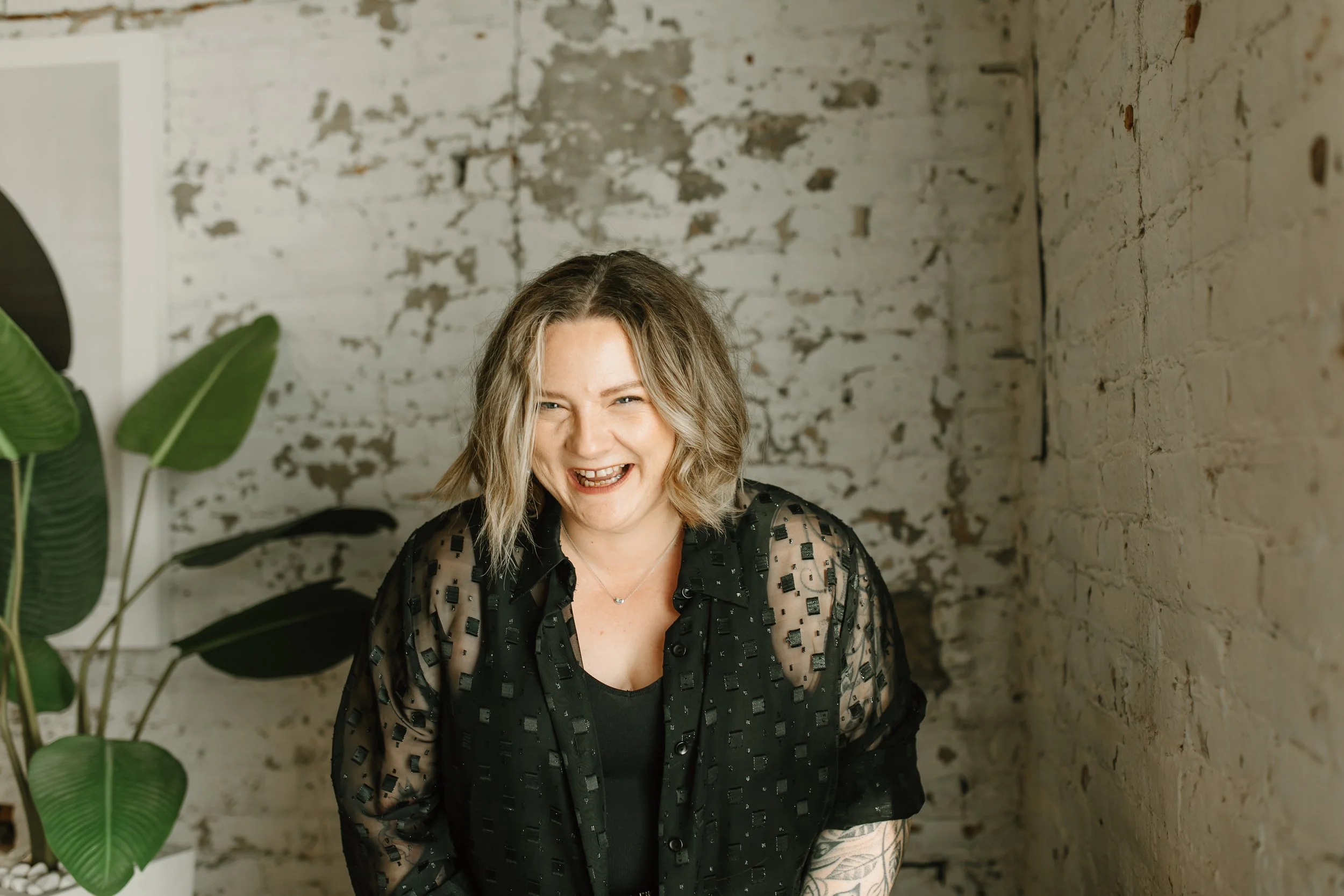
At Wild Precious Life Psychotherapy, I offer compassionate trauma care for clients as young as 4, and across the lifespan. With 6 years experience in the field of mental health care, my work is grounded in a place of listening, connection and honesty. As human beings, our struggles at any age reflect a relationship between our inner life and our outer world. Sometimes this relationship produces effects that are confusing or upsetting — like explosive behaviours from a child, or the feeling of being “too thin skinned” as an adult. Violence in the current world seems to increase with each passing day, thrusting our nervous systems into a state where we have to be on the lookout all the time. As all the right structures are crumbling and all the wrong ones appear to be governing with fear and intimidation, it can be hard to make sense of our inner world in relation to this outer reality. When surviving is hard enough, how do we also find room to thrive, to feel joy and see beauty?
At Wild Precious Life Psychotherapy, the focus of our work together is helping you trust the depth of your own resilience and wisdom. Resilience is a hard won badge, and the word is misused as a pretty way to package up trauma, i.e. the silver lining mentality. Resilience is often measured as if it were an ingredient in the recipe “good mental health.” I don’t want to measure how fast you bounce back, I want to give you moments of feeling held and supported. These moments add up together and over time become stability. How have your experiences shaped you, like the grooves of a vinyl record and the scratches that make it skip? True resilience is the freedom to be present with the darkest nuances of ourselves.
-
Trauma can be both a remembered specific event or set of events, or it can come from an older experience, before language or cognitive processing. Trauma does not have an objective definition. Traumatic experiences are not themselves binaries, but their effect is to divide our bodily experience sharply into inside or outside, good or bad, life or death.
When I was seven years old, I ran away from my elementary school playground and hid in a garbage disposal bin. I stayed hidden there until the police found me, well after dark. I was hurt and scared. The kids in my class viciously bullied me and eventually I felt the only choice I had was to run away. My parents then took me to someone they called a “feelings’ doctor.” This would be my first encounter of many with mental health professionals, through childhood, adolescence and adulthood. At first there was a diagnostic approach with a psychiatrist – was there something wrong with me? I already believed deep down that there was something wrong with me; my experiences with the kids at school showed that. The psychiatrist then was only confirming my own hypothesis.. The next professional was a children’s psychoanalyst who told my parents everything was their fault. This other kind of feelings’ doctor would only talk to my parents and I separately. I felt farther and farther away from my parents. I don’t remember this professional ever asking me directly what was wrong. I never had the sense there was anyone truly on my side. My parents deeply cared for me and wanted to support me in any way they could. The missing link in my story is validation. Instead of receiving this, I learned instead that my skin was too thin, my emotional life too fragile and that to get better, I had to toughen up. And so I did. I grew around that feeling of a deep flaw, burying it deeper into my core with each achievement. I tried to cover up what I was certain I knew: there was something wrong with me.
Parts of my life I did not know or remember were shaping me. In my early infancy, my mother cared for her own mother as she moved through the final stages of Alzheimer's. My grandmother died in the first eight months of my life and my infant body understood grief and pain as the folds of my mother’s nightgown when she nursed me, the scent of her hair and skin. These early sense memories are saturated with grief. Over time, maturity and through engaging with therapy, I came to understand that the pain of these childhood disconnections made their way into my life in different ways as I got older. They echoed earlier experiences which were beyond language, the scent and the touch of grief forming the envelope of my infant body. Created a close relationship to pain. Adverse experiences later in my life layered on top of this early attachment trauma. My pain shaped into a tangle I could not seem to escape.
My nursery school teacher described me as a “lightning rod,” conducting the electrical current of every emotion straight to my heart and mind. I now understand this attunement as an incredible gift, but it is a lifetime’s work to understand how to carry it. The inside of that metal garbage bin provided my seven year old self with protection from cruelty and bullying. As I have moved through adulthood, instead of the garbage bin, I sought deeply layered connections with practitioners who sat with me as I looked into the darkest crevices of my experience. In these relationships, my body found a new kind of safety.
Wild Precious Life Psychotherapy grew out of a desire to care for clients in the same way that I received the care which eventually moved the dial for me in my own life. After seven years in the field of social work and psychotherapy, gaining different kinds of clinical experience, trauma care is where my skillsets and experience come together. In my parallel life as an artist, my work seeks to understand the power and wisdom of the body, trying to honour what it holds. I have foundational training in contemporary dance technique and choreography, embodied knowledge is an essential value of the work I do as a psychotherapist. Through all the different currents in my life, my work holds a sustained belief in the deep wisdom of embodied life. -
My entry into trauma care, and mental healthcare more generally, is structured by the core philosophy that there are multiple entry points to any one problem. Events in our lives are influenced by multiple factors. With more than a decade of training and working as an artist, I see whatever you bring to the table through a lens that includes multiple entry points and non-linear causes. This way of understanding allows me to be present with what is showing up and opens the doorway to authentic connection.
Trauma treatment historically was understood as correlating symptoms that you could see to treatments that we knew about, often in a linear cause and effect model. 25 years ago, diagnostic criteria for PTSD were developed. The diagnostic criteria would become the gold standard for trauma treatment and because they allowed a complex nervous system response to be broken down into pieces that could be cared for, treated. Our mental health system in Canada is situated along a medical treatment continuum that prioritizes fixing problems that we can see and understand, with solutions that we know about. Most treatments and programs exist to support the resolution of symptoms appearing on the surface, which match up what is known to treat them.
At Wild Precious Life Psychotherapy, I begin by trying to grasp what layers might be under the surface wound, things that don’t fit in the treat-what-you-can-see-and-know model. Trauma shows up in our daily lives as responses we have over and over, core beliefs about ourselves, churning emotions, a sense of having a thin skin or absorbing everything, noticing everything. In children, it is often “behaviours” that don’t seem to match the situation or where they become swallowed up by the intensity of a feeling and can’t name where it started.
I’m looking to do more than excavate old memories in order to map them on to current experiences. I view trauma care as the possibility for my clients to feel safe enough that the pain of lived experiences, pre-verbal or cognitive, can have the space they need. I am here to support you, or your child, as you move through the intensity of this, and we will slowly integrate what comes up, building a foundation where your nervous system can find safety. Here, your future self can thrive.
-
I often joke that I am a “second career social worker.” I come to this profession with a background in studio arts and advanced academic degrees in Performance Studies. Currently I practice as a Registered Social Worker and have a Master’s degree in Social Work from Wilfrid Laurier University. I bring 6 years of diverse clinical experience in both public and private sector settings to Wild Precious Life Psychotherapy. My special interest lies in working with complex trauma presenting in childhood or throughout adulthood. Working with healthcare professionals and first responders has recently become a sub-specialty and consider being able to help a client hold and carry the kind of intensity a unique skill and point of connection. I have worked with adults and children as young as 4, supporting through experiences including attachment trauma and developmental trauma, gender based violence, loss and grief, parental separation, chronic illness and neurodivergence.
I am formally trained in the evidence based frameworks for trauma-specific care including. I completed each of these trainings post-grad, which add up to more than 150h honing my craft and seeking to be better prepared to meet your needs in therapy:
→ Eye Motion Desensitization and Reprocessing (EMDR)
→ Somatic parts work (Internal Family Systems)
→ Deep Brain Reorienting
→ Polyvagal work
These frameworks all seek to access knowledge stored in the body that may not be at the forefront of our cognitive brain. It may belong to younger parts of ourselves showing up when we least want them to, or perhaps it's a feeling that you just can’t seem to settle inside.
I have specialized training to work with these trauma treatments in young children and am pleased to offer at my in person office:
→ EMDR Sand Tray and Therabuzzers
→ Interventions for ambiguous loss in children
→ Art-based methods
→ Drama-therapy and dollhouse role playing
Working with children and parents, my approach always starts from the belief that underneath every surface behaviour, there is a missing skill or a need that isn’t being met. To uncover that need and help you meet it for your child I draw on:
→ Collaborative and Proactive Solutions
→ Emotion Focused Family Therapy
→ Triple P Parenting
In addition, I have training in general skills based modalities for children and adults:
→ Dialectical Behaviour Therapy (DBT)
→ Cognitive Behaviour Therapy (CBT)
→ Acceptance and Commitment Therapy (ACT)
→ Emotion Focused Therapy
These types of interventions can support you as you move through what comes up in the day to day while engaged in our deeper process.
-
Phase 1
For everyone:
1 x 15min consult call
During this call, you can briefly describe why you want to seek therapy services, and ask me questions about my practice, approach, fees and policies or anything related to the therapy process.
One 90min non-diagnostic assessment appointment
We will spend deep time getting to know one another and establishing whether I am a good fit for your needs. In this appointment I gather in depth information about your history and experiences. I often use mood and behaviour measurement scales or other tools during this appointment as this allows me a snap shot of where we started that is easy for me to go back to. I then start working through a rough treatment plan and hone in on which tools are most appropriate and where I think a point of entry might be.
For child clients:
If you are a parent bringing your child to therapy, this initial 90min appointment would be for any and all primary caregivers in the child’s life. It is essential for me to have a rich understanding of the context the child is living in which informs how I can then engage going forward. This appointment is just for you, without your child present. You can choose to do these appointments virtually or in office.
After this appointment, I go away and think a lot about what I learned about your child you want to bring to therapy. I hear consistently from parents about their children who have been in therapy before, “They learned so many skills but when it comes time to use them in the heat of the moment, they can’t!”
I understand how from a parents’ perspective it could feel frustrating to think that you are doing everything you can to support your child by bringing them to therapy. In my work, I believe that starting from a place of teaching children “skills” follows the same logic as treating only what is visible on the surface. Wild Precious Life Psychotherapy starts with growing a relationship between the clinician and the client, providing a safe container that can access the deeper layers of emotion which underlie your child’s big emotion explosions. From the safety of this relationship, we can begin to address what is presenting externally and move towards healthier and easier ways to manage challenging situations.
Phase 2
Adult clients come in for a second 60min meeting where I transparently share understandings gained from the non-diagnostic assessment. I will also give my initial ideas for collaboration on working together. This is the time to really see if we are a good fit. I invite your ideas, feedback questions and anything else that came up for you since the first appointment.
Parents:
1 30min virtual appointment to discuss the initial treatment plan and collaborate on entry points and areas of priority.
The sessions are booked separately and virtual as I currently do not have a play area at my office for children to wait unattended while their caregiver meets with me alone. It’s important to have this second meeting with only the therapist and caregiver(s).1 60min full session with myself and the child. Often the parent stays for all or part of that session or joins in subsequent sessions until the child feels comfortable. During this session, consent and confidentiality are outlined and I try to establish rapport by inviting caregiver and child to participate in activities or games for all of us.
Phase 3
Ongoing treatment.
Depending on what we have identified as your desired frequency or treatment outcomes, we will work towards those.
Parents:
Ongoing parent collaboration is essential to the work that I do and you can expect to be booking separate caregiver sessions every 4-6 weeks ongoing while your child is under my care.
-
All services at Wild Precious Life Psychotherapy are delivered by Niomi Anna Cherney, MSW, RSW and her OCSWSSW license # will be provided to you with your session receipt. I do not provide direct billing at this time.
Our prices are structured around the duration of your session.
Individual initial intake or parent consultation, 75mins - $240
Individual psychotherapy, 50mins - $160
Documentation - $50+ per letter depending on circumstance
EMDR Packages for Healthcare Providers and First Responders
Working with the amount allocated by your insurance company, we will determine a package fee which will cover 12-15 EMDR weekly sessions for an agreed upon period of time.
Please inquire if this is something you’re interested in.
Wild Precious Life Psychotherapy is pleased to offer sliding scale care to uninsured artsworkers and children of artsworkers. During every intake session I discuss openly what resources clients have available for therapy, so please feel free to inquire about at that time.
Payment is processed through the online system. JaneApp will prompt you to input your credit card or Visa Debit in order to start a file and book with WPLpsychotherapy. If you wish to use a different card or pay by e-transfer please notify Niomi at least 2h before the session or your payment method will automatically be processed. All payment by e-transfer to hello@niomicherney.com must be received at least 2h before the session.
CANCELLATION POLICY
48 hours notice is required to cancel or reschedule appointments in order to avoid being charged for missed appointments which are 100% of the original session fee. With adequate notice, WPLpsychotherapy can accommodate your desired change and offer the time slot to another client. I understand that emergencies and extenuating circumstances happen. Please get in touch with me as soon as possible using JaneApp secure messaging or email if a change is needed regarding your appointment.
Fees will not be waived for regular occurrences of sickness or inclement weather. If you or your child experience Covid or flu-like symptoms before an in-person session, or if you cannot safely commute to the office, please switch your appointment to virtual. Many kids do better with that switch than we would expect, and it allows for continuity in the therapeutic relationship. If you are an adult attending regular therapy, take time to think in advance of how or where you could have a virtual appointment for yourself if the need arose due to weather events or mild illness.
I appreciate your understanding with regards to this cancellation policy. Being an individual in self-employed practice is precarious. I want to continue being able to provide consistent, long term and sustainable care for all my clients. Policies like this one allow me to do so.
Land Acknowledgement
Wild Precious Life Psychotherapy acknowledges that this land (Kitchener, Waterloo, Cambridge and Brantford) including the Haldimand Tract is the traditional territory of the Anishnawbe, Haudenosaunee, and Neutral Nations. In trying to do this work, I express a deep recognition for the ways in which colonial ways of thinking, being and knowing, particularly in the field of Western social work and psychotherapy, have harmed Indigenous peoples and continue to perpetuate that harm today.
In similar ways, colonial approaches to mental health have harmed people who occupy any position outside the status quo. This includes individuals marginalized by race, but extends as well to those who identify as 2SLGBTQIA+ or anyone living with a disability. I seek to deepen my understanding of past harmful impacts on marginalized groups through engaging with learning and community opportunities offered by organizations such as the Ontario Association of Social Work, as well as smaller scale projects like Therapists 4 Palestine and Corporeal Writing. I continue to grow my capacity to listen to wounds created by racial trauma through my chaplaincy work with Rabbis for Ceasefire, and ongoing work with Independent Jewish Voices. In every way, I believe that therapy is political and that it is a tool to confront what we are living through in the wake of late stage capitalism, imperialism and colonialism.
“When I realized the storm was inevitable, I made it my medicine.
What part of your life’s record is skipping?
What wound is on repeat?
Have you done everything you can to break out of that groove?”
Andrea Gibson, “How the Worst Day of My Life Became My Best”